Standard precautions (infection control)- what is included?

What is included as part of Standard Precautions?

SP protect healthcare staff and patients from infection transmission via Direct or Indirect contact modes. The assumption is made that all blood/body fluids are potentially infectious and PPE measures should be taken by staff during healthcare to avoid exposure to bare skin or mucous membranes.

Respiratory hygiene, cough etiquette and the addition of physical (social) distancing measures mean that Standard precautions also reduce transmission via respiratory droplets from an infected person. 

COVID-19 note:  well-observed SP provide provide protection from contact and droplet transmission whatever the status of the patient and across all modes of healthcare delivery.  They are the starting point – if SP cannot be followed properly, then use of vertical (selective) additional transmission-based precautions (gowns, gloves, eye protection and mask) will only have a partial protective effect for staff.    

Hand hygiene (World Health Organisation 5 Moments for Hand hygiene Standard) remains a critical priority in the WHO Clean Care is Safer Care program.

Asepsis – conducting invasive and other key procedures with proper regard to Asepsis is critical and applies to all care settings including non-surgical procedures such as preparation of IV medication or insertion of an IV cannula.

Australia specifies 8 key elements for SP – see poster below.  Other ‘Standard Precautions’ that apply across all settings and patients include: 

  • safe handling and transport of laboratory specimens
  • antimicrobial stewardship
  • immunisation
  • healthcare-associated infection surveillance and analysis of risk across the healthcare system
  • safe hospital design, including ventilation

References

Approach-3-Standard-Precautions-Photo-PDF-693KBStd prec

Posted in Standard precautions | Leave a comment

Cyclospora cayetanensis – practical morphology

Cyclospora cayetanensis oocysts are similar to Cryptosporidium parvum oocysts but are approx. twice as large.

Both are acid fast and stain pink/red/burgundy with safranin . Cyclospora can be more acid-fast variable and can have a bubbly appearance and be granular. In unstained wet mounts, Cyclospora appear glassy non-refractile spheres.

Always measure the cysts- 1.2 x 9.0uM.   ( Cryptosporidia  4-6uM)

Cyclospora is a pathogen affecting upper GIT and small bowel. It may cause explosive diarrhoea. In most cases the diarrhoea is self limiting.  Outbreaks have been linked to contaminated water and various types of fresh produce including lettuce, snow peas, basil, raspberries.

snipImage2 SnipImage

Posted in Protozoa | Tagged | Leave a comment

Antimicrobial resistance: WHY it matters, HOW did it arise and WHAT can we do about it – PNG focus

Global status of AMR with focus on PNG Medical Symposium Sept 2015

Why does AMR matter?

  1. Antimicrobial resistance kills- mortality higher for resistant pathogens
  2. AMR hampers the control of infectious diseases – prolonged infectivity – eg. MDR-TB
  3. AMR increases the costs of health care
  4. Achievements of modern medicine are put at risk by AMR
  5. AMR threatens health security, damages trade and economies

Practical approaches to AMS PNG 2015 Ferguson Continue reading

Posted in A/m resistance, A/m stewardship, Infection prev & control, PNG | Tagged , | Leave a comment

Case report (from AAC): Community-Acquired Pyelonephritis in Pregnancy Caused by KPC-Producing Klebsiella pneumoniae

Abstract (full case report with expert commentary is free)

Carbapenem-resistant Enterobacteriaceae (CRE) usually infect patients with significant comorbidities and health care exposures. We present a case of a pregnant woman who developed community-acquired pyelonephritis caused by KPC-producing Klebsiella pneumoniae. Despite antibiotic treatment, she experienced spontaneous prolonged rupture of membranes, with eventual delivery of a healthy infant. This report demonstrates the challenge that CRE may pose to the effective treatment of common infections in obstetric patients, with potentially harmful consequences to maternal and neonatal health.

Capture

This is a new Antimicrobial Agents and Chemotherapy Journal section that presents a real, challenging case involving a multidrug-resistant organism. The case authors present the rationale for their therapeutic strategy and discuss the impact of mechanisms of resistance on clinical outcome. An expert clinician then provides a commentary on the case.

Posted in Bacteria (GNEG), Cautionary tales, Infectious diseases, Module-Urinary tract infection | Tagged , | Leave a comment

An everyday tragedy: treating asymptomatic bacteruria with antibiotics


Act 1 of a common tragedy that sets the scene for antibiotic resistance – an elderly female resident of a nursing home complains of minor dysuria or perhaps just has urine that appears cloudy or smelly. The nurse collects some urine and performs a urinalysis that shows presence of white cells and nitrite.  The urine is sent to pathology where microscopy shows > 100 WC per 10^9/L and a pure growth of E. coli.

The result returns and prompts a call from the nurse to the local community General Practitioner(GP) for the patient- the GP provides a phone order for cephalexin course to treat the patient who by now has no further dysuria nor other symptoms.    Acts 2, 3 and 4 repeat the same cycle over successive months.

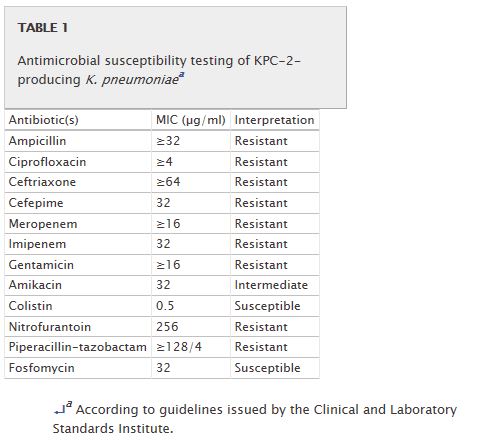
Finale – Klebsiella pneumoniae grown that exhibits this multi-resistant antibiogram (FOT represents fosfomycin):

Urine antibiogram

Epilogue – the GP wisely calls the clinical microbiologist to discuss the result. It is confirmed that the patient has minimal symptoms and is systemically well.  No antibiotic treatment is given. The patient is advised to use citrate salts to alleviate dysuria when it recurs and to consider the use of topical oestrogen cream applied to the vaginal introitus as a preventative strategy.

A new Australian Choosing Wisely campaign that builds on a similar foreign venture ( National Prescribing Service)  encourages doctors and patients to question unnecessary interventions. Inappropriate use of antibiotics to treat asymptomatic bacteruria is a major contributor to antibiotic overuse. Asymptomatic bacteruria is when a significant number of uropathogenic bacteria are present in the urine with no or minimal accompanying symptoms such as burning and frequency.

Bacteriuria is extremely common in elderly men and women. It is frequently associated with pyuria and abnormal urinalysis.  Testing of urine from patients with minimal symptoms is NOT indicated. Minor lower tract UTIs are almost always self-limited in any case and are best treated with symptomatic measures in the first instance.

Recurrent symptomatic UTIs in older people should prompt a number of considerations, particularly if pyelonephritis or bacteraemic infection recurs (complicated cases). These include:

  • presence of underlying prostatitis (men)
  • presence of anatomical problems (women) such as uterine or urethral prolapse
  • whether a trial of topical oestrogen is indicated (women)
  • unnecessary exposure to indwelling catheters or mis-management of catheter systems

The overuse of antibiotics for asymptomatic bacteruria  is costly, and is a major cause of antimicrobial resistance and post antibiotic C. difficile infection.

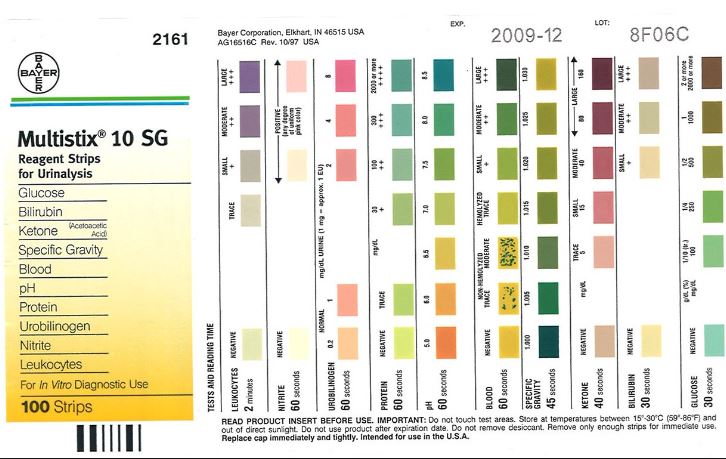
A common initial step towards urinary antibiotic resistance misadventure – the urinalysis test: 

Urinalysis

(Presence of nitrite merely indicates the presence of a species of Enterobacteriaceae (eg. E. coli that are able to reduce nitrate to nitrite. Other causes of UTI like Streptococcus do not lead to a positive nitrite result.)

Posted in A/m stewardship, Cautionary tales, Module-Urinary tract infection | Tagged | Leave a comment

Acute infections that present with a normal or low white cell count (doxycycline deficiency!)

These considerations are also relevant to places like PNG and Nepal, especially given the relative lack of lab diagnostics. Please share your questions or comments about other causes that are relevant in your localities!

mdjkf's avatarAIMED - Let's talk about antibiotics

There is a long list that will vary according to your locale.  Across Northern NSW, the important ones to consider include:

  • Viral illnesses including influenza, adenovirus, viral hepatitis, parvovirus, EBV and CMV
  • Rickettsial disease (spotted fevers, rarely murine typhus). See useful information page from NSW Health.
  • Q Fever (Coxiella burnetti)  (low platelets often, moderately abnormal liver function tests)
  • Brucellosis (wild pig hunters !)
  • Leptospirosis

In certain overseas travelers, the most important considerations include:

  • malaria (evidence of haemolysis, low Hb, low platelets also often seen- at least 3 negative smears/ICTs required to exclude)
  • typhoid fever  (abnormal liver function, high CRP, positive blood and/or stool cultures)
  • dengue and other arboviral diseases  (low platelets, neutropenia as well, CRP relatively normal)
  • scrub typhus (Orientia tsutsugumushi)
  • measles

View original post

Posted in Infectious diseases | Tagged | Leave a comment

Lets talk about antibiotics – Australian blog focused on practical stewardship

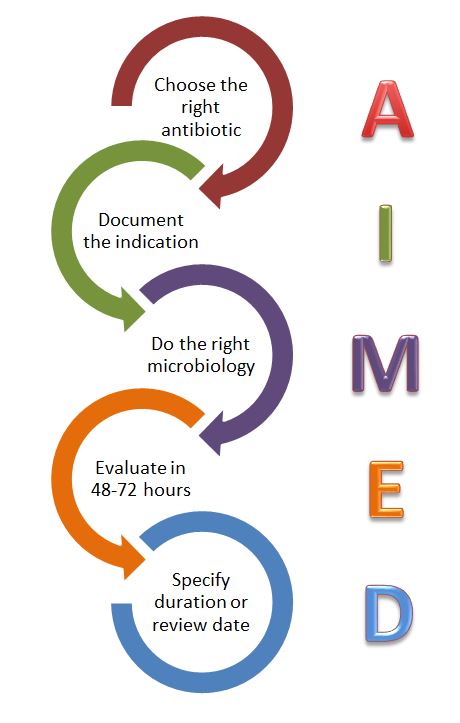
A I M E D stands for five essential principles relating to optimal use of antimicrobials :

Capture

This site aims to discuss antimicrobial stewardship issues of local relevance to prescribers, pharmacists and other interested groups.

This site is supported by a brains trust that includes general practitioners, pharmacologists, pharmacists, microbiologists and infectious disease physicians.

Posted in A/m stewardship | Tagged | Leave a comment

Room temperature bubble-through water chambers for patient oxygen supply are an infection hazard and do not provide significant humidification!

These commonly used devices are usually contaminated with environmental Gram negative bacteria that like moist environments – eg. Pseudomonas species, Alcaligenes, coliforms and other. These organisms may be multi-resistant.  The physics of humidification show that these room temperature devices do NOT significantly increase the humidity of the gas. Furthermore, patients on short-term low-flow oxygen therapy via mask or nasal prongs do NOT require humidification of oxygen – this is definitely not a practice followed in developed world situations. There are high flow oxygen circuits used, but these have heated humidification chambers with sterile water added, managed under strict asepsis Continue reading

Posted in Cautionary tales, Infection prev & control, Med Micro topics-advanced | Tagged , , , | Leave a comment

Infectious diseases 101

Some thoughts to stimulate discussion!

  1. Make friends with your enemy (micro-organisms). Know a lot about The most important pathogens. Be systematic and critical about your knowledge and study. Access local research and expertise as much as possible. Contribute to research. Organism study proforma.
  2. Know your antibiotics and again, know a lot about The most important antimicrobials. Be systematic about your study- use multiple sources. Antimicrobial study proforma. Aminoglycoside and vancomycin dosing and administration require particular focus.
  3. Understand how to use microbiology to the best advantage. The aim is to know what you are treating and direct the therapy appropriately. Visit the lab where you are working and learn from the pathologist or microbiology scientist. Collaborate with them in the interest of the patient.
  4. Understand how antimicrobial susceptibility is measured and the limitations of lab testing. Understand that the ‘in vivo’ susceptibility test does not always get it right!
  5. Understand antimicrobial resistance and access local patterns of resistance from Pubmed (cumulative antibiograms) – this is your guide to empirical therapy in sepsis. If/when local antibiotic guidelines are established, follow these as they should have factored in local resistance patterns. Be skeptical about foreign (and local) guidelines and potential conflicts of interest in those who formulate them.
  6. Remember that to avoid Tragedy of the Commons, we all need to behave differently as prescribers to preserve this precious resource. Always make your antibiotic therapy A I M E D.
  7. Learn about Antibiotic stewardship programs. The ARHAI Antimicrobial prescribing and stewardship competencies are a good place to start. Be a systems engineer – patients need effective care and medicos are well-placed to speak up for patient interests and improve systems of care.
Posted in Infectious diseases | Tagged | Leave a comment

Does completing the course reduce bacterial antibiotic resistance?

The notion that completing the course of an antibiotic reduces the emergence of bacterial resistance is not accepted anymore. From in vitro evidence, we know that prolonged exposure to antibiotic, particularly at low levels (as occurs for instance in the oropharynx of patients treated with most oral antibiotics) is a good way to breed bacteria that are resistant – mutational change and horizontal gene transfers are potentiated by the stress induced by antibiotic exposure. Antibiotic presence provides a selective advantage for resistant sub-populations that then become dominant.

Posted in A/m resistance | Tagged | Leave a comment