Outbreaks unpacked- recent tutorial material

The online Field Epidemiological Manual is an essential resource.  Here are the 10 steps, and 10 pitfalls list we went through.

This is a great survey of the wider topic from a local leading thinker:  Outbreak-insights-looke-2012.

EpiInfo is the free CDC software much beloved by field epidemiologists for easy data collection and analysis.  If you want to learn one program, start with this one!

This epi-graph-and-line-list-for-flu provides a simple way to set up a line list and epidemiological curve.  Line lists are based on the Australian CDNA Influenza in Aged care guideline.

See here for some great example epidemic curves with explanations. Excerpts below:

point-source

continuing-source

Posted in Infection prev & control, Statistics | Tagged , | Leave a comment

Lablogatory – medical pathology unpacked – a great clinical resource

This looks like a great site for post grad pathology and medicine trainees -interesting case by case discussions – worth working through one per week.

SimGalimam's avatarAIMED - Let's talk about antibiotics

If you have a curiosity about what actually goes on in a medical pathology lab. and matters pathological, then this is the site for you. There are fabulous clinical case presentations with detailed pathological correlation (many great photos) –  just the thing for medical post graduate students but also great for others involved with diagnosis and treatment of infection and other disorders.

The Lablogatory team is a broad church – regular contributors also write about topics such as global health, lab safety, molecular diagnostics, and the daily life of a clinical pathologist. There are short quizzes to test your knowledge. Wherever your interests lie, you’re sure to find something relevant!  It certainly complements what we are trying to do at AIMED.

Please visit  Lablogatory and see what you think! 

View original post

Posted in Med Micro topics-advanced | Leave a comment

Metapneumovirus (hMPV) – bug of the week

Human-metapneumovirus-sept-2016-path-north summary sheet.

See also this local case reports of severe pneumonia due to hMPV.  Includes discussion of Hunter New England region, NSW,  Australia epidemiology and current knowledge / research in to hMPV.

Note the change to taxonomy that has occurred in 2016 : Pneumoviridae is a new virus family in the order Mononegavirales. It was created in 2016 by elevating the now dissolved paramyxoviral subfamily Pneumovirinae.


Posted in Module-Respiratory infections, Module-virology, Viruses | Tagged , | Leave a comment

Adenovirus – bug of the week

Adenovirus overview -2016-path-north; Prepared for our weekly pathology teaching round by one of our registrars.

Reference

Image credit: http://www.daviddarling.info/encyclopedia/A/adenovirus_infection.html


Posted in Module-virology, Viruses | Tagged , | Leave a comment

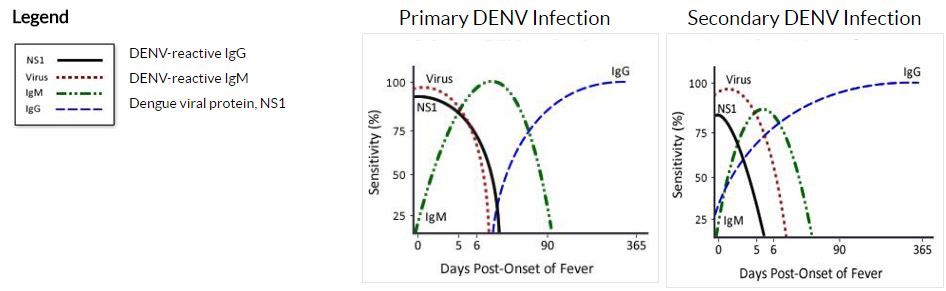
Severe primary dengue- recent case and discussion

Guest posting from our Infectious Diseases advanced trainee, Dr Milton Micallef.

N.B.

dengue

Posted in Infectious diseases, Module-virology, Viruses | Tagged | Leave a comment

What adverse fetal outcomes are associated with dengue in pregnancy?

Guest posting: Dr Ayesha Akram, Microbiology Registrar, Pathology North, NSW. 

Prematurity and low birth weight are important causes of neonatal death and despite increasing awareness of the importance of these adverse pregnancy outcomes, the causes remains unknown on many occasions. Dengue fever is endemic in many regions of the world especially in Southeast Asia and Oceania. With 390 million estimated dengue infections each year woman of reproductive age are also at increasing risk of symptomatic dengue infection.  Previously very little was known about the possible adverse effects of dengue infection during pregnancy. Continue reading

Posted in Module-virology, Viruses | Tagged , | Leave a comment

Extrapolating key antibiotic susceptibilities for Staphylococcus aureus

Posted in A/m resistance, Antimicrobial susceptibility testing | Leave a comment

Laboratory assays for diagnosis of tick-borne infections

Excellent overview by the Australian expert, Stephen Graves that is highly relevant to all countries, not just Australia. Professor Graves has been responsible for ground-breaking discoveries in this area and has much wisdom to impart. The incidence of rickettsial disease and Q fever in many tropical locations is poorly studied.

Laboratory assays for diagnosis of tick-borne infections- Graves June 2016

Capture

tick

Posted in Bacteria (GNEG), Infectious diseases | Tagged , , | Leave a comment

Guide to MRSA strains and their emergence

It’s important to understand as much as you can about Staphylococcus aureus – it is such a prevalent cause of community and healthcare-associated infection and remains a major challenge to control.  It’s not just one species – various clones of MSSA and MRSA dominate across parts of the world and within subpopulations for reasons that are not always apparent despite much deep research into organism sequences and putative virulence gene expression. Always important to keep in mind that the epidemiology of S. aureus will vary in different locations according to what specific strains are prevalent.  Critical host factors that make disease more likely are also still in dispute – watch this space! Continue reading

Posted in Bacteria (GPOS), Staphylococcus aureus | Tagged | Leave a comment

Micro comments unpacked: Gram negative bacteremia

mdjkf's avatarAIMED - Let's talk about antibiotics

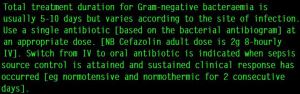
Here is an example comment from Pathology North which is added to positive blood culture reports when a Gram negative coliform species ( Enterobacteriacae eg. E. coli) has been isolated:

bgnr

The comment’s rationale is to promote short course treatment and also to prompt oral antibiotic switching in a timely manner.  It also prompts consideration of source control, an important issue in all patients with sepsis. There are no data that establish a minimum duration for IV therapy.  Endocarditis and other metastatic complications are extremely rare with these species, contrasting with bacteraemia due to Staphylococcus aureus where prolonged high dose IV therapy is predicated on this risk.

View original post 182 more words

Posted in Microbiology | Leave a comment