This resource provides free to air photos of great quality-just the thing for your presentations and learning.


This resource provides free to air photos of great quality-just the thing for your presentations and learning.
This recent symposium was a great wrap up of whole genome sequencing at its many applications organised by the Doherty Institute in Melbourne. Here is my (short) Doherty-symposium report which will give you some idea of where things are going- a rapidly developing field!
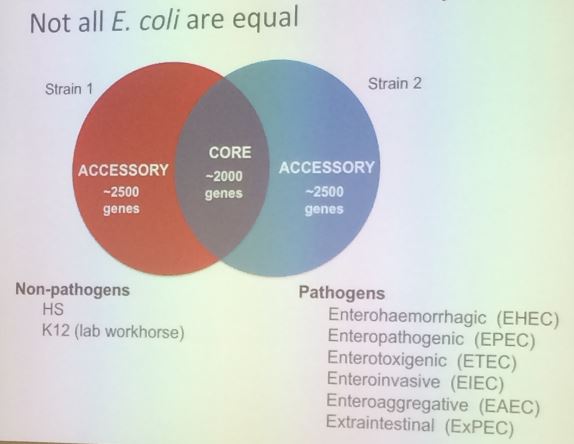
Short interesting review of this cutting edge topic for your December delectation!
“Human-associated microbes have primarily been viewed through
the lens of a single species and its environment. Advances in culture independent
technologies have shown the enormous diversity, functional
capacity, and age-associated dynamics of the human microbiome .
A large number of diverse microbial species reside in the distal gastrointestinal
tract, and gut microbiota dysbiosis — imbalances in the composition and function
of these intestinal microbes — is associated with diseases ranging from localized
gastroenterologic disorders to neurologic, respiratory, metabolic, hepatic, and
cardiovascular illnesses. Much effort is currently concentrated on exploring potential
causality and related microbiota-mediated disease mechanisms, with the hope
that an improved understanding will fuel the conception and realization of novel
therapeutic and preventive strategies.”
Courtesy of Dr Suman Majumdar, Dr Catherine Berry and others.
Recent presentation from our advanced trainee registrar concerning the new TB drugs: Brian_Chong 2017 New TB drugs.
TB drug monographs : up-to-date clinical profiles of TB drugs including guidance on monitoring of therapy.
As well- Zika and risk of microcephaly – see this NEJM report.
This is a useful BCG systematic review concerning childhood protection against TB- worth reading in detail.
Longterm BCG protection into adulthood – vaccine efficacy (VE) 10-19 years post BCG was 58% (95% CI 27 to 76) p=0·002 and there was still a non-significant signal occurring in the 30-39 year group (VE 42%) in this large observational study from Norway.
BCG halves neonatal mortality – also read this important commentary from Dr Frank Shann in 2012. There are also heterologous protective effects of measles vaccination in infants.
A team is running a current RCT of neonatal BCG in Melbourne to examine immune correlates and influence on infection and allergy. Existing evidence of BCG influence on childhood allergy was summarised here by Freyne and Curtis – conflicting relatively weak evidence; hence one of the rationales for the trial . Other related papers of interest include:
As part of your systematic review of a micro-organism species or group of species (e.g. Enterobacteriaceae) , knowledge about the ‘epidemiology‘ is essential, the second element in the ORGANISM knowledge proforma.
“Epidemiology is the study of the distribution and determinants of health-related states or events in specified populations, and the application of this study to the control of health problems.” [ref1]
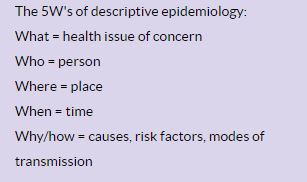
In your reading or when asked during a viva examination to “describe the epidemiology” of an organism or disease, concern yourself with a few basic questions- always a lot to say about most bugs! :
For an excellent online course see the self learning package from CDC (USA). Knowledge of epidemiology is essential for pathologists, physicians and others.
Reference
Excellent background materials from ICPMR, NSW ( circa 2009):
Molecular-diagnosis-in-microbiology-ferguson-2016: overview presentation.
N.B. visit your local molecular lab if there is one and examine and understand all of the assays in use – for commercial assays, obtain the product inserts to read.
The online Field Epidemiological Manual is an essential resource. Here are the 10 steps, and 10 pitfalls list we went through.
This is a great survey of the wider topic from a local leading thinker: Outbreak-insights-looke-2012.
EpiInfo is the free CDC software much beloved by field epidemiologists for easy data collection and analysis. If you want to learn one program, start with this one!
This epi-graph-and-line-list-for-flu provides a simple way to set up a line list and epidemiological curve. Line lists are based on the Australian CDNA Influenza in Aged care guideline.
See here for some great example epidemic curves with explanations. Excerpts below:


This looks like a great site for post grad pathology and medicine trainees -interesting case by case discussions – worth working through one per week.

If you have a curiosity about what actually goes on in a medical pathology lab. and matters pathological, then this is the site for you. There are fabulous clinical case presentations with detailed pathological correlation (many great photos) – just the thing for medical post graduate students but also great for others involved with diagnosis and treatment of infection and other disorders.
The Lablogatory team is a broad church – regular contributors also write about topics such as global health, lab safety, molecular diagnostics, and the daily life of a clinical pathologist. There are short quizzes to test your knowledge. Wherever your interests lie, you’re sure to find something relevant! It certainly complements what we are trying to do at AIMED.
Please visit Lablogatory and see what you think!
 Microbiology and Infectious Diseases postgraduate teaching (PRIDA)